


How to Find a New Private Dentist in York: What to Look for and How to Register
Key Takeaways
- NHS access in York is severely limited: Healthwatch York has stated there are no known practices offering immediate NHS dental care in the city, making private dentistry a practical necessity for many residents seeking timely treatment.
- Registering with a private dentist is straightforward: Unlike NHS registration, there is no lengthy waitlist process at most private practices. You contact the practice, book a new patient appointment, and your registration is typically completed as part of that first visit.
- Your first appointment should be a full assessment, not just a quick look: A proper new patient examination covers your teeth, gums, bite, jaw joints, and soft tissues, and usually includes digital X-rays and a written treatment plan.
- GDC registration and CQC status are non-negotiable checks: Every dentist practising in the UK must be registered with the General Dental Council (GDC), and every practice is regulated by the Care Quality Commission (CQC). Both registers are publicly searchable.
- A dental membership plan can make private care more predictable: Many York practices offer monthly plans that bundle routine check-ups and hygiene appointments for a fixed fee, typically in the range of £15 to £50 per month, spreading the cost and removing the barrier to regular attendance.
Finding a new private dentist in York is easier than many people expect. You do not need to join a waiting list, fill in complex forms, or prove you live in a particular area. Most private practices in York are accepting new patients right now, and you can often get your first appointment within days of making contact. The harder part is knowing what to look for so you choose a practice that suits you for the long term, not just the next check-up.
Why So Many York Residents Are Looking for a Private Dentist Right Now
Before getting into the how, it helps to understand the why, because the dental landscape in York has changed significantly over the past few years. If you have been searching “private dentist near me York accepting new patients” and feeling like the whole system has let you down, you are far from alone.
Healthwatch York has confirmed that there are difficulties getting an NHS dentist in York that have been a problem for some time, and the organisation does not know of any dental practices able to provide immediate NHS dental care in the city. That is a striking situation for a city the size of York. Accessing NHS dental care in North Yorkshire has become increasingly difficult and expensive, leaving many people without the treatment they need, particularly those not already registered with an NHS dentist, as practices accepting new patients are scarce.
Approximately one in four adults in the North East and Yorkshire region cannot access NHS dental care, with over 1.7 million people facing unmet dental needs. The picture nationally is similarly stark. More than 12 million adults in England cannot access an NHS dentist, and approximately 46% of NHS dental practices in England closed to new adult patients in 2025. Typical waits to register are 6 to 18 months in cities and 2 to 5 years in rural areas.
None of this is to say that NHS dentistry has no value. For patients already registered with a York practice and receiving treatment, it remains a cost-effective option. But if you are currently unregistered and need to see someone, the private route is for most people the only realistic way to get timely, continuous dental care in York right now. The good news is that registering privately is quicker and simpler than many people assume.
How to Register with a Private Dentist in York: Step by Step
The process is genuinely uncomplicated. Unlike registering with a GP, most private dental practices don’t require a lengthy application process. In many cases, you can book your first appointment online or over the phone, attend a comprehensive new patient examination, and begin your dental care within days. Here is how it works in practice:
- Step 1: Identify practices accepting new patients. Search online for private dentists in York and check their websites. Look for clear wording such as “new patients welcome” or an active online booking system. You can also use the Dental Choices directory at dentalchoices.org to browse York practices and see community-reported availability, though it is always worth calling directly to confirm current status, as this changes frequently.
- Step 2: Make contact. Phone, email, or use the online booking form. After identifying a dental practice, begin by contacting them to enquire about registering. Registration is a simple, fast process that typically takes a few minutes. Ask specifically whether they are accepting new private patients for general and ongoing care, not just one-off treatments. Some practices take new patients for hygiene appointments only, so it is worth clarifying upfront if you want a long-term dentist.
- Step 3: Complete your patient information. Before your appointment, you will normally be asked to complete a medical history form. This helps your dentist understand your general health and identify any factors that may affect your dental treatment. Most practices now offer this digitally so you can fill it in at home before you arrive. Be thorough with your medical history, including any medications you take and any relevant conditions, as this genuinely affects how your clinician plans your care.
- Step 4: Attend your new patient examination. This is the heart of the process. In many cases, you do not need to complete a lengthy registration process before arranging your first visit. Your registration is usually completed as part of your new patient appointment. You will be asked to sign a patient registration form at the practice, and from that point you are on their books.
- Step 5: Receive your treatment plan and agree next steps. Your dentist will review your medical and dental history, discuss any symptoms or treatment goals, complete a thorough examination of your teeth, gums, and mouth, and take digital X-rays if clinically necessary. They will then explain their findings, answer your questions, and discuss the most appropriate options available, so you understand not only what treatment may be recommended but why it is being suggested and what outcomes you can reasonably expect.
What a New Patient Examination Should Include (and Red Flags to Watch For)
Not all first appointments are equal. A proper private new patient examination is considerably more involved than the brief check-ups some people remember from NHS dentistry. A private new patient consultation is not just a check-up. It is a comprehensive assessment of your whole oral health picture: your teeth, yes, but also your gums, your bite, your jaw joints, and your soft tissues.
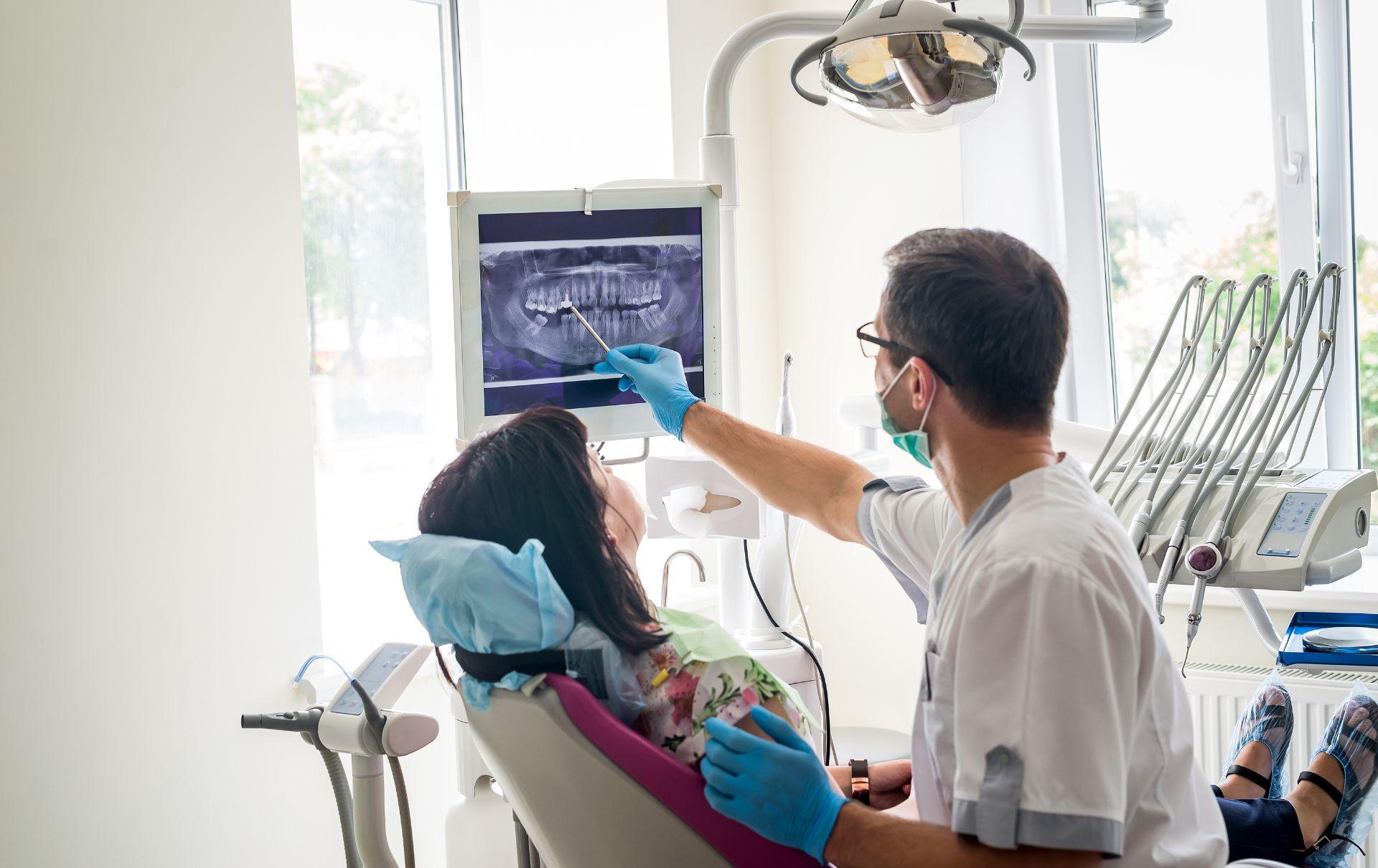
Specifically, you should expect your dentist to examine your teeth for signs of decay and existing restorations, assess your gum health by probing around each tooth, check your bite and jaw joint function, and screen the soft tissues of your mouth for anything unusual. Your dentist will discuss any findings with you and outline a personalised treatment plan. Oral cancer screening is a standard component carried out as a precautionary measure. Digital X-rays may be taken if clinically indicated. These are not automatic for every patient, but if you have not had X-rays in several years, your dentist is likely to recommend them.
It is worth checking whether a practice’s new patient offering includes routine check-ups, hygienist appointments, emergency support, and treatment planning, especially if you want a long-term dentist rather than a one-off appointment. Your dentist should ask about your medical history, medications, dental concerns, previous experiences, and any symptoms such as pain, bleeding gums, sensitivity, or jaw problems.
Red flags to look out for: a first appointment that feels rushed and lasts under 20 minutes without a clear explanation of findings; no written treatment plan or cost estimate; pressure to begin treatment immediately without giving you time to consider; or a practice that cannot tell you the full cost of any recommended work before you commit. Transparency about fees is essential. Before committing to a private dentist, familiarise yourself with their financial policies, including accepted payment methods, insurance coverage, and available financing options. Transparency regarding fees and billing practices is essential to avoid any surprises down the line.
What It Costs: Private Dental Fees in York
Private dental fees vary between practices, and York is no exception. Research carried out in August 2026 found that a new patient examination typically costs £79 across UK practices, but the average tells you little about what you will actually pay. Across data collected from over 9,000 UK dental practices, prices for identical treatment can vary enormously, even between practices just a few miles apart.
For context, here are indicative price ranges for common treatments at private practices in the UK. These are market benchmarks, not this practice’s specific fees. Always ask for a written cost estimate before any treatment begins:
- New patient examination: Typically £68 to £95 across UK practices, with a UK-wide median of around £79. Some York practices advertise introductory rates for new patients, so it is worth checking when you call.
- Routine hygiene appointment (30 minutes): Typically £72 to £98.
- White (composite) filling: Typically £125 to £188 for a single surface.
- Crown: Typically £637 to £853 depending on material and complexity.
- Root canal treatment (front tooth): Typically £375 to £587.
- Dental implants: Expect to pay from around £2,400 per implant at most UK practices, though this varies considerably depending on the implant system used and any additional procedures required.
One thing to ask about when you call: a new patient examination fee might include a comprehensive examination and basic X-rays, or it might cover only the examination with X-rays charged separately at £12 to £40 each. Always ask what is included in the headline price before you book.
Dental membership plans are worth considering as a way to manage routine costs. These are monthly membership plans offered by the practice itself, often administered by companies such as Denplan or Practice Plan. For a fixed monthly fee, these plans typically cover two check-ups per year, two hygienist appointments per year, and necessary X-rays. A dental plan is a monthly payment scheme where you pay a fixed amount to your dentist each month, receiving agreed routine dental care included in your monthly fee, plus discounted rates on selected additional treatments. Plans at different UK practices typically run from around £15 to £50 per month depending on the level of care included and your individual clinical needs.
How to Choose the Right Private Dentist in York: The Key Factors
York has a number of private practices accepting new patients, which means you have a genuine choice. That is a good thing, but it does require a little research rather than just booking with the first result you see. Here is what to consider.
GDC and CQC Registration: The Non-Negotiables
All dentists, dental hygienists, therapists, nurses and technicians must be registered with the General Dental Council (GDC) to work in the UK. The GDC is the body which regulates dental professionals in the UK. You can use the GDC website to check your dentist is registered and see their qualifications. This takes about 30 seconds at gdc-uk.org and is always worth doing, even with well-established practices.
While all dental clinicians register as individuals with the GDC, the dental practice itself registers with the Care Quality Commission (CQC). The CQC is the independent regulator of health and social care services in the UK. It provides advice and guidance, as well as publishing inspection reports. Checking both the GDC and CQC websites can help you understand the standards of care and treatment to expect when choosing a dentist and dental practice. CQC inspection reports are public, free to access, and genuinely informative.
GDC registration is not just a formality: it is a key safeguard for patients. Dentists and dental care professionals must maintain ongoing training through continuing professional development (CPD) to keep their skills current and safe.
Reading Reviews Properly
Google reviews are useful, but how you read them matters. A practice with 200 reviews averaging 4.8 stars tells you more than one with 12 reviews at 5.0. When interpreting reviews, look for consistent themes, both positive and negative. A few negative reviews amidst many positive ones might not be a red flag, but recurring complaints about specific issues such as long wait times or hidden costs should be noted. Pay attention to recent reviews for the most current picture.
Also look at how the practice responds to any negative feedback. A professional, solution-focused response to a complaint tells you something reassuring about how the team operates day to day.
Services and Scope of Care
Think about what you are likely to need beyond a routine check-up. If you have young children, does the practice see children as well as adults? If you are interested in cosmetic treatments such as teeth whitening or Invisalign, does the practice offer these on site, or would you need to be referred elsewhere? Check whether the practice clearly lists the services offered that you are interested in. Take time to read the team bios to get to know the dentists and their qualifications, experience, and any special interests.
It is also worth asking about emergency access. If you develop toothache on a Friday afternoon, can your practice see you quickly? A good private practice should have a clear pathway for existing patients with urgent needs.
Practical Logistics
This sounds mundane, but it matters. Consider practicalities such as opening hours, accessibility, digital X-rays, intraoral scanners, and whether a hygienist is on site. A practice that closes at 5pm Monday to Friday may not suit you if you work full time. Similarly, parking near some York city centre practices can be challenging, so a practice on the outskirts with a car park nearby might suit your routine better.
How the Practice Communicates
Pay attention to how the practice communicates with you before you even become a patient. A good private dentist will take the time to explain procedures, answer questions, and involve patients in decision-making. If calling the practice feels like pulling teeth (so to speak), that is useful information. If the receptionist is warm, answers your questions clearly, and gives you a realistic picture of what to expect, that usually reflects the culture of the whole team.
Private vs NHS Dentistry in York: Clearing Up the Confusion
A lot of people searching for a dentist in York are genuinely confused about the difference between NHS and private care. Some assume private dentistry is simply the same care at a higher price. Others believe it is only for cosmetic treatments. Neither is quite right. Here is a clearer picture.
What Private Dentistry Actually Offers That NHS Cannot
Private dental care covers the full range of clinical needs, from routine check-ups and fillings through to complex restorative work and cosmetic treatments. The key differences are appointment length, choice of materials, and access. A private new patient appointment is typically longer than an NHS equivalent, giving your dentist time to build a complete picture of your oral health rather than addressing only the most urgent issue. You may also have access to a wider range of materials and techniques. White composite fillings, for example, are the standard in private practice, whereas NHS dentistry applies clinical criteria to which filling materials are available.
Cosmetic treatments such as teeth whitening, clear aligners (Invisalign and equivalents), porcelain veneers, and smile makeover work are not available on the NHS at all. These are exclusively private treatments regardless of which practice you attend.
The Cost Comparison in Reality
NHS dental care in England is charged in three fixed bands: Band 1 covers an examination, X-rays, and scale and polish (currently £27.90), Band 2 covers fillings and extractions (currently £76.60), and Band 3 covers crowns, bridges, and dentures (currently £332.10). These charges are capped and represent good value if you can access them. The catch in York, as discussed above, is that access is the problem: there are no practices offering immediate NHS dental care in York, and some practices have long waiting lists that patients may need to join while considering other options.
For private care, pricing truly varies locally, with about four-fifths of the variation coming down to which practice you choose in your own area. This means it pays to get fee information from two or three York practices before deciding, rather than assuming all private care is priced identically.
The Membership Plan Middle Ground
One thing that makes private care more accessible than many people expect is the monthly membership plan. A dental membership plan is a monthly payment arrangement that typically covers routine dental care such as check-ups and hygiene appointments, while offering reduced fees on additional procedures. Plans like these aim to make private dental care more accessible and financially predictable, helping patients maintain consistent oral health without unexpected costs. For a household where two adults each join a practice membership plan, the total monthly outlay for routine care can be comparable to or only modestly more than the cost of two NHS courses of treatment per year, without any waiting list.
Myths Worth Dismissing
One persistent myth is that you need to formally “deregister” from your current NHS dentist before joining a private practice. You do not. There is no formal registration system for NHS dentists. You do not “register” for life; your relationship with the practice only lasts as long as your course of treatment. Since 2006, when the NHS introduced a new dental contract, there has been no formal patient registration system, meaning your relationship with the practice only lasts as long as your course of treatment. You are free to register with a private practice at any time.
Another common concern is that switching to private means losing access to NHS care forever. This is not the case either. Private and NHS treatment are not mutually exclusive. You are not bound to a catchment area; you can choose a dentist wherever it is convenient for you. If NHS access improves in York in future, you would remain free to register with an NHS practice at that point.
Why Choose Our York Practice
We understand that choosing a new dentist feels like a significant decision, particularly if you have not been seen in a while or have had less-than-positive experiences elsewhere. Our approach is built around giving new patients the time and information they need to feel genuinely comfortable, not just processed through a system. We are GDC-registered, CQC-inspected, and committed to transparent pricing so there are never any surprises when it comes to costs. If you are ready to register with a private dentist in York who is accepting new patients now, we would welcome the chance to look after you.
Frequently Asked Questions
Can I register with a private dentist in York even if I am currently on an NHS waiting list elsewhere?
Yes, absolutely. Being on an NHS waiting list at another practice does not prevent you from registering with a private dentist in York. The two systems operate independently. You can join a private practice today, begin your care promptly, and remain on any NHS waiting list simultaneously if you choose. There is no obligation to inform your current or previous practice, and no formal deregistration process is required on your part.
How long does the new patient registration process take at a private practice?
Unlike registering with a GP, there is no lengthy application process for most private dental practices. In many cases, you can book your first appointment online or over the phone and begin your dental care within days. The registration paperwork itself, which typically involves a medical history form and basic contact details, takes just a few minutes. Your formal registration is usually completed as part of your first appointment rather than as a separate step beforehand.
What should I bring to my first private dentist appointment in York?
You do not need to bring much. A list of any medications you are currently taking is genuinely useful, as is any information about medical conditions that might be relevant (for example, a heart condition, diabetes, or a blood clotting disorder). If you have any previous dental records or X-rays from another practice, you are welcome to bring these, though it is not essential. Your dentist will take their own X-rays if clinically indicated. Write down any questions or concerns you have in advance; it is easy to forget them once you are in the chair.
How much does a new patient examination cost at a private dentist in York?
Research carried out in August 2026 found that a new patient examination typically costs around £79 at UK private practices, though the average tells you little about what you will actually pay. A new patient examination fee might include a comprehensive examination and basic X-rays, or it might cover only the examination with X-rays charged separately. Always ask what the fee includes when you book. Indicatively, new patient examinations at York private practices tend to fall within the UK market range of roughly £60 to £110. Please contact our practice directly for our current fees.
What if I am nervous about going to the dentist?
Dental anxiety is extremely common, and a good private practice will be experienced in helping patients who feel apprehensive. A good dental team will be used to helping anxious patients and should explain what will happen, take things at your pace, and avoid making you feel judged. When you first contact a York practice, it is worth telling them upfront that you are anxious. This allows the team to plan your appointment accordingly, give you extra time, and ensure the clinician knows to take a gentler, more conversational approach from the start. Do not let anxiety be the reason you delay seeking care.
How do I check that a dentist in York is properly registered and qualified?
All dentists must be registered with the General Dental Council (GDC) to work in the UK, and you can use the GDC website to check your dentist is registered and see their qualifications. Simply visit gdc-uk.org and search by name. You can also check the CQC website (cqc.org.uk) to find the most recent inspection report for the practice itself. Both searches are free and take less than a minute. A reputable practice will always be happy to discuss its team’s qualifications and GDC registration numbers if you ask.
What cosmetic treatments are available at private dentists in York?
Most established private practices in York offer a range of cosmetic treatments alongside routine general dentistry. Common options include professional teeth whitening, composite bonding (where tooth-coloured resin is used to reshape or repair teeth), porcelain veneers, and clear aligner orthodontics such as Invisalign or similar systems. Some practices also offer dental implants for missing teeth and smile design consultations for patients considering more comprehensive changes. None of these treatments are available on the NHS, so if any of them interest you, a private new patient consultation is the right starting point. Costs vary significantly by treatment and complexity, so always ask for a detailed written estimate before proceeding.
How often should I see a private dentist once I have registered?
Your dentist will recommend a recall interval based on your individual clinical needs, rather than automatically booking everyone in every six months. Patients with a history of good oral health, low decay risk, and stable gums may be fine seeing their dentist once a year, while those with active gum disease, a higher caries risk, or complex dental histories may benefit from more frequent check-ups. Separately, hygiene appointments are often recommended at slightly different intervals to dental examinations. Your dentist will discuss what is appropriate for you at your new patient appointment and explain the reasoning, so you understand the recommendation rather than just accepting it.
Can my whole family register at the same private practice in York?
Most private dental practices welcome families, including children of all ages. It is worth checking when you first contact a York practice whether they have a dentist or dental therapist who sees younger patients, and whether there are any specific paediatric services or nervous child protocols in place. Registering the whole family at one practice has practical advantages: one set of records, one trusted team, and the convenience of booking appointments together. Some practices also offer family-friendly membership plans that include children at a reduced monthly rate alongside the adult membership, so it is worth asking about this when you enquire.
This article is intended as general guidance only and does not constitute professional dental or medical advice. Every patient’s oral health needs are individual, and the information provided here may not apply to your specific circumstances. Any pricing figures mentioned are indicative market ranges based on publicly available UK data and are subject to change; they do not represent the fees of any particular practice. You should always consult a qualified, GDC-registered dental professional before making any decisions about your dental care or treatment. If you would like personalised advice, we warmly invite you to book a new patient consultation with our York practice, where one of our clinicians will be happy to assess your needs and discuss the options available to you.









 2 dental health examinations per year