

How Long Does Invisalign Actually Take in York? A Realistic Timeline for Adults
Key Takeaways
- Most adults complete Invisalign in 6 to 18 months, though the actual range runs from around 3 months for very minor corrections up to 24 months for complex crowding or bite cases.
- Crowded teeth take longer than gaps or mild spacing issues: mild crowding typically resolves in 6 months, while moderate to severe crowding can take 12 to 18 months or more, depending on how many teeth need to move and how far.
- Wearing your aligners 20 to 22 hours a day is the single biggest factor you control. Inconsistent wear is the most common reason treatment runs over the original schedule.
- Refinements are a normal part of the process, not a sign something went wrong. Many patients need at least one round of additional aligners to fine-tune the final result, and this is usually factored into comprehensive treatment plans from the outset.
- Active treatment is only part of the commitment. Retainers are worn full-time for 3 to 6 months after your final aligner, then at night long-term, to hold your results in place.
- Blossom Dental Care in York is a Certified Diamond Invisalign Provider with over 700 cases completed from their Blossom Street clinic, offering a free 3D smile simulation so you can see your projected outcome before committing to treatment.
For most adults in York, Invisalign takes somewhere between 6 and 18 months of active treatment, with 12 months a reasonable benchmark for a moderate case involving noticeable crowding. That said, the honest answer is more layered than a single number: your starting alignment, the Invisalign plan your dentist recommends, and how consistently you wear the aligners all shape the timeline significantly. This post breaks down what to expect at each level of complexity, and what will actually determine whether your treatment finishes on time or runs longer.
The Invisalign Treatment Process, Step by Step
Understanding the full journey from consultation to retained smile helps you plan realistically, both in terms of time commitment and what each stage involves.
- Initial consultation and assessment: Your dentist examines your teeth, discusses your goals, and determines whether Invisalign is suitable for your case. For straightforward cases this is often a single appointment, but it is the most important one: it is where the scope of your treatment is mapped out.
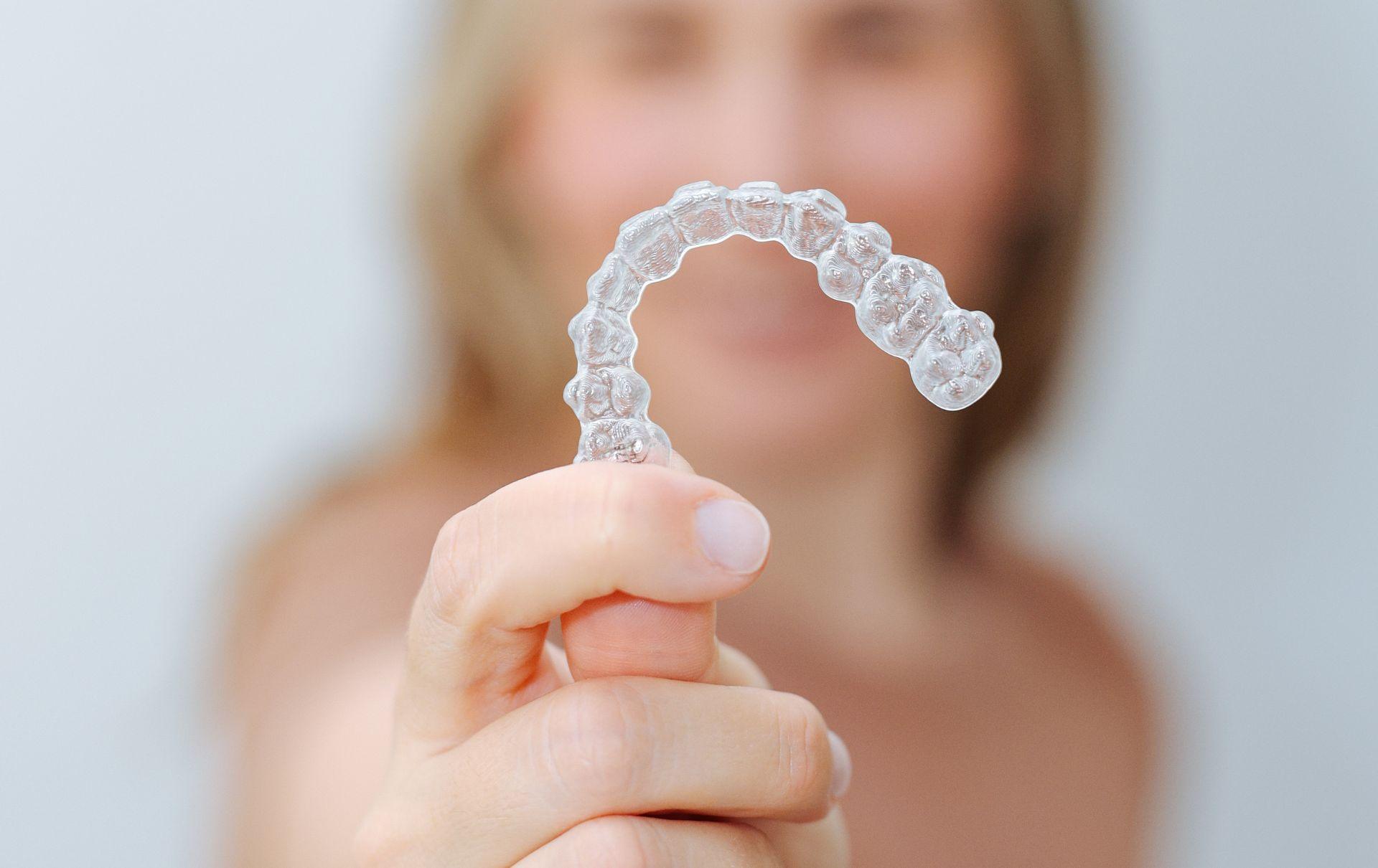
- Digital scanning and ClinCheck planning: Rather than messy impressions (though some practices still use these), most clinics now use intraoral scanners to create a precise 3D model of your teeth. This feeds into Invisalign’s ClinCheck software, which plans out every stage of tooth movement across each aligner. You will usually be shown a simulation of your projected result at this stage.
- Aligner fabrication: Once you approve the treatment plan, your aligners are manufactured by Align Technology and sent to the practice. This typically takes two to four weeks from the point of approval.
- Active treatment (wearing your aligners): This is the main phase and the one most people think of when they ask, “How long does it take?” You progress through a series of aligner trays, typically switching every one to two weeks depending on your clinician’s protocol. Each tray moves your teeth a small increment. Some aligners will have tooth-coloured attachments bonded to specific teeth to help the plastic grip and achieve more precise movements, particularly for rotations and vertical shifts.
- Progress check appointments: You will see your dentist periodically throughout treatment, usually every six to eight weeks, to confirm your teeth are tracking correctly with the aligners. If a tooth is not moving as planned, your clinician can intervene early rather than discovering the issue at the end.
- Refinements (if needed): More on this in detail below, but after you finish your initial aligner series, your dentist will assess whether any fine-tuning is required. Additional aligners may be prescribed to reach the final position.
- Retention: Once active treatment ends, retainers begin. This phase is permanent in some form, though the intensity of wear decreases over time. Again, more on this later in the post.
Realistic Timelines by Case Type: Mild, Moderate, and Complex
This is the section most people actually want. The numbers below reflect what clinical evidence and experienced providers consistently report across UK adult patients. They are ranges, not guarantees: your specific case may sit at either end or somewhere between.
- Mild cases (minor crowding or small spacing, front teeth only): Mild cases involving minor crowding or small gaps typically resolve in 3 to 6 months. These are often treated with Invisalign Lite or Go rather than a full comprehensive plan. Invisalign Express is usually the fastest option, often completed in around 3 to 6 months for very minor corrections. Realistically, if your issue is a single slightly rotated front tooth or a small gap that has opened after previous orthodontic treatment, this bracket applies to you. If you have crowding across multiple teeth, it probably does not.
- Moderate cases (noticeable crowding across a full arch, minor bite issues): The majority of adult Invisalign patients in general dental practice fall into the moderate complexity category. This encompasses cases involving crowding across multiple teeth, spacing between teeth, mild rotations, and some bite improvements. Treatment in this range typically takes between 9 and 18 months, with the most common duration for a standard full-arch correction being around 12 to 15 months. This is the bracket where most York adults seeking Invisalign will land. It is also the bracket where compliance makes the most difference to whether you finish at 12 months or closer to 18.
- Crowded teeth specifically: Crowding is worth its own mention here because it is one of the most searched-for case types and one of the most misunderstood in terms of timeline. Mild crowding can be resolved in approximately 6 months, but moderate to severe cases could take 12 to 18 months. The complexity of realigning multiple teeth in confined spaces can extend the duration of treatment. Crowding is more demanding on the aligner system than spacing issues, because teeth need to be bodily moved into positions they currently cannot occupy without first creating room. You will have to move teeth a greater distance when you have more dental crowding, and this will prolong treatment time.
- Complex cases (significant crowding, bite correction, rotations across multiple teeth): For patients with significant crowding, more pronounced bite issues such as overbites, underbites, or crossbites, or cases requiring movement of posterior as well as anterior teeth, Invisalign treatment may last from 18 months up to approximately 24 months. These cases require more aligners, more complex engineering within the ClinCheck plan, and often more attachments to achieve precise tooth positions. It is also worth knowing that in very severe cases, Invisalign may not be the most suitable option at all. In severe cases of teeth crowding, Invisalign may not be the optimal treatment option. Your orthodontist will share their professional opinion and may recommend using other treatments alongside Invisalign or suggest an alternative approach entirely.
How Much Does Invisalign Cost in York?
Blossom Dental Care’s published Invisalign pricing starts from £3,025, which is competitive for a Certified Diamond Provider in Yorkshire. To give that context within the wider UK market: Invisalign costs in the UK range from £2,000 to £5,500, with the average for Invisalign Comprehensive treatment sitting at around £4,000 in 2025. Across 210 dental practices, one recent UK survey found the average cost for any Invisalign treatment was £3,244.
The right plan for your case will determine where within that range your treatment sits. Invisalign Comprehensive, suitable for mild, moderate, and some complex cases, typically runs from £3,500 to £5,500 and covers treatment of 12 to 24 months, while Invisalign Lite, for mild to moderate cases, averages £2,500 to £4,000 over 6 to 8 months.
A few other costs to keep in mind when budgeting. Factor in potential charges for refinement aligners and replacement retainers if these are not included in your package. Many comprehensive plans include at least one round of refinements and an initial set of retainers, but it is worth confirming this at your consultation. Many providers include one or two refinements in the initial treatment package, but additional refinements may have extra costs. At Blossom, the Invisalign Comprehensive package includes free Vivera retainers (normally worth around £400), which removes one of the most common post-treatment additional costs.
The Factors That Will Actually Determine Your Timeline
Beyond the broad case-type categories, four specific variables tend to separate patients who finish on schedule from those who run over. All four are worth understanding before you commit.
Aligner Compliance: The Most Controllable Factor
Consistent wear of the aligners for 20 to 22 hours a day is key to achieving the quickest and most effective results. That means removing them only to eat, drink anything other than water, and brush your teeth. In practice, most people underestimate how difficult this discipline is to sustain across a 12-to-18-month treatment. A long dinner, a weekend away, the habit of leaving them out for a few extra hours during an event: none of these feels significant individually, but they accumulate. Invisalign aligners are designed to work only when worn consistently, applying gentle and continuous pressure. Inconsistent wear can slow down tooth movement, affect aligner fit, and even increase overall treatment time. If your aligners do not seat fully over your teeth when you try to move to the next tray, it is usually because the current tray has not done its full job yet. Your clinician may ask you to stay in the same tray longer, which pushes back every subsequent tray change and your finish date with them.
Biological Response: Why Some Teeth Move Faster Than Others
Even two patients with identical starting positions can have different treatment durations. Bone density, the condition of the periodontal ligament, and how your individual teeth respond to sustained pressure all vary between people and even between different teeth in the same mouth. Tooth movement predictability varies by type, with bucco-lingual tipping being most accurate, whereas rotation, intrusion, and expansion exhibit lower precision. In plain terms: tipping a tooth slightly is easier for aligners to achieve than rotating or moving it vertically. Cases that require a lot of rotation tend to take longer and are also more likely to need refinements.
Refinements: Normal, Common, and Not a Failure
This is something a lot of patients are surprised to learn. Many orthodontists report between 70 and 80% of their patients require refinements. Refinements are simply additional aligner trays prescribed once you have finished your initial series, designed to fine-tune positions that did not quite reach their intended destination. Invisalign refinements are actually a normal and helpful part of achieving the best possible results. Some of the most common reasons for needing refinements include teeth that move more slowly than expected, minor bite issues, attachments coming off during treatment, not wearing aligners consistently enough, and natural biological differences in how teeth respond.
What this means for your timeline: if your Invisalign Comprehensive plan says 14 months, build in the possibility of an extra 2 to 3 months for refinements, particularly if your case involves crowding or rotations. Mild cases often require no refinements at all. Moderate cases usually need one to two refinements to fine-tune tooth positioning. Complex cases may need three refinements to address multiple adjustments or bite corrections.
Case Complexity and Which Invisalign Plan You Are On
The plan type your clinician recommends reflects the scope of movement required. Invisalign Express (i7) covers very minor corrections in around 3 to 4 months, Invisalign Lite handles mild to moderate crowding or gaps in 4 to 6 months, and Invisalign Comprehensive addresses complex alignment or bite issues over 12 to 18 or more months. The plan is not something you choose based on cost alone: it is determined by the number and type of tooth movements required. A Certified Diamond Provider like Blossom Dental Care will have the clinical experience across all plan types to advise you accurately on which is appropriate for your case, rather than fitting you into a plan that is not suited to your starting position.
Invisalign vs. Braces for Crowded Teeth: Which Is Actually Faster?
This is one of the most common questions adults ask when researching their options, and the answer is genuinely more nuanced than either technology’s marketing suggests.
Where Invisalign Has the Edge
For mild to moderate cases, Invisalign is typically 3 to 6 months faster than traditional braces. Part of the reason for this is the efficiency of planning. Braces sometimes force crowded teeth to flare outward before pulling them back into place, a process called round-tripping. Invisalign software plans the most direct route for each tooth. If a tooth does not need to move, the aligner simply holds it still. That targeted approach can trim time off treatments that would otherwise involve unnecessary movement with fixed brackets.
Where Braces Have the Edge
For straightforward cases of mild to moderate crowding, spacing, or bite issues, Invisalign and braces can both achieve excellent outcomes. However, for more complex orthodontic issues, such as severe crowding, significant overbites, underbites, or rotations, fixed braces are often more effective because they give the orthodontist greater control over tooth movement. There is also the compliance factor. Braces are fixed to your teeth: they work continuously, every hour of every day, regardless of your motivation. With Invisalign, the treatment only works when you wear the aligners. Braces do not care about your willpower. They are cemented to your teeth, working continuously whether you are motivated or exhausted. For some patients, that is an honest reason to consider fixed braces instead.
The Myth That Invisalign Is Always Quicker
It is worth addressing directly, because it is a misconception that influences a lot of people’s decisions. Invisalign’s faster average partly reflects case selection. The aligners are used more frequently for milder cases, which naturally resolve faster regardless of the method. When researchers controlled for similar complexity, the gap narrowed considerably. Invisalign and braces typically take similar timeframes, 12 to 24 months, for most cases. Neither is inherently faster; it depends on your specific alignment needs. The honest answer is that for mild to moderate crowding, Invisalign tends to be at least as fast as braces and often faster. For severe or complex cases, the speed advantage largely disappears, and sometimes fixed appliances complete the work more reliably.
When Invisalign May Not Be Suitable for Crowded Teeth
There is a ceiling to what clear aligners can achieve. Very severe crowding, particularly where there is significant overlap of multiple teeth or where extraction of premolars is required to create space, may be better treated with fixed braces, or with a combined approach: braces first to create space, aligners afterwards to finish. A thorough clinical assessment is the only way to know which applies to your case. No reputable Invisalign provider should be enrolling patients in clear aligner treatment that is unlikely to fully address their presenting issue.
Life After Active Treatment: The Retention Phase
Finishing your final aligner tray is genuinely satisfying. But it is not the end of the commitment, and this is something patients are sometimes surprised to learn. Teeth naturally try to shift back to their original spots after treatment. Bone and gums need time to stabilise around the new alignment. Without a retainer, crowding, gaps, or bite issues can return within months.
After finishing Invisalign, it is generally recommended to wear your retainer full-time for the first 3 to 6 months, removing it only to eat, drink anything other than water, or clean your teeth. This initial period is crucial, as it allows the bone and gums to stabilise around your new tooth positions. Once this settling phase is complete, most patients move on to night-time wear indefinitely. Night-time only wear is far less disruptive than active treatment, but it does need to continue long-term. Guidance from NHS orthodontic trusts recommends wearing retainers every night for the first year after treatment, and then on alternating nights as a long-term maintenance strategy. Patients are advised that some tooth movement will occur if they stop wearing their retainer altogether, and that the only way to maintain permanently straight teeth is lifelong part-time wear.
At Blossom Dental Care, Invisalign Comprehensive patients receive free Vivera retainers as part of their treatment package, which is a meaningful inclusion given that retainers typically cost several hundred pounds to replace separately. Vivera retainers are made by the same company that produces Invisalign aligners and are significantly more durable than standard clear plastic retainers.
Why Blossom Dental Care Is the Right Choice for Invisalign in York
Blossom Dental Care holds Certified Diamond Invisalign Provider status, reflecting extensive clinical experience across the full spectrum of Invisalign case types. Blossom Dental Care is a Certified Diamond Invisalign Provider in York, having completed over 700 teeth-straightening cases from their boutique clinic on Blossom Street in York city centre. The team includes Dr Nathaniel Tidy, who specialises in Invisalign aligners and cosmetic orthodontics alongside complex restorative work, meaning patients benefit from a clinician who understands how orthodontic treatment interacts with the broader health of your smile. With a free 3D smile simulation, transparent pricing from £3,025, and Vivera retainers included in the Comprehensive plan, Blossom offers the kind of complete, considered care that makes a significant time and financial commitment feel well-supported from the first appointment to the last.
Frequently Asked Questions
How long does Invisalign take for crowded teeth specifically?
It depends on the degree of crowding. The treatment length depends on the severity of the crowding and your compliance with wearing the aligners. Mild cases may be resolved in as little as 6 months, while more complex cases can take 18 to 24 months. Most patients complete Invisalign treatment for crowded teeth within 12 to 18 months on average. If you have crowding on just one arch involving two or three teeth, you are likely at the shorter end. If you have crowding on both arches with overlapping teeth and a bite component, plan for 15 to 18 months or more.
Will my treatment take exactly as long as the ClinCheck plan says?
Not necessarily. The ClinCheck plan gives you a projected aligner count and a corresponding duration, but this assumes perfect compliance and perfect tooth tracking. In practice, most patients end up with at least one round of refinements, which adds additional weeks or months. Think of the ClinCheck estimate as your baseline if everything goes to plan, and allow some buffer in your expectations. A good clinician will give you an honest range rather than a single number at your consultation.
What happens if I do not wear my aligners for the full 22 hours a day?
Skipping days with Invisalign or not wearing aligners for the recommended amount of time can delay progress and affect treatment outcomes. When aligners are not worn consistently, teeth may begin shifting back toward their previous positions. This can prevent the current aligners from fitting properly and disrupt the planned treatment process, resulting in delayed treatment progress, poor aligner fit, increased discomfort when restarting aligners, teeth not tracking properly, and additional refinements. If this happens repeatedly, your treatment will run significantly longer than originally planned. The 22-hour requirement is not cautious marketing: it reflects the sustained pressure that tooth movement through bone genuinely requires.
Are Invisalign refinements included in the price at Blossom?
Blossom Dental Care’s Invisalign Comprehensive package includes refinements within the treatment plan, along with free Vivera retainers. This is one of the clearest advantages of choosing a Diamond-level provider with an all-inclusive approach: you are not hit with additional costs mid-treatment if your teeth need fine-tuning. It is always worth confirming exactly what is included at your consultation, particularly if you are comparing quotes between practices.
Can I see what my teeth will look like before I commit to treatment?
Yes. Blossom Dental Care includes a free 3D smile simulation as part of the treatment process. Before treatment begins, you will be shown a 3D animated preview of how your teeth will move with the Invisalign treatment and how your smile will look at the end. This is generated from your digital scan data and gives a meaningful indication of the expected outcome, though your clinician will always clarify that the simulation is a guide rather than a guaranteed prediction.
Is Invisalign suitable for adults with more complex cases, or is it only for straightforward corrections?
Over recent years, Invisalign has advanced to a point where it can treat minor to complex bite cases. That said, the upper limits of what aligners can reliably achieve still exist. Very severe crowding, significant vertical tooth movements, and certain types of bite correction may be better addressed with fixed braces, or with a combined approach. The only way to know which applies to you is a proper clinical assessment. A Certified Diamond Provider like Blossom has experience treating the full range of case types and will give you a straight answer about what Invisalign can and cannot achieve in your specific case.
Do I need to do anything to prepare my teeth before starting Invisalign?
Your clinician will assess the health of your teeth and gums before starting treatment. In most cases, any outstanding decay or gum disease needs to be treated first, as orthodontic treatment should not begin on a mouth that is not in good baseline health. You may also be referred for a hygiene appointment to ensure your gum health is stable. Occasionally, some IPR (interproximal reduction) is needed at the start or during treatment: this involves carefully removing a very small amount of enamel between teeth to create space for movement, and is a routine part of many Invisalign plans for crowded cases.
Can Invisalign also improve my bite, or does it only straighten teeth?
Invisalign can address a range of bite issues, including overjets (where the front teeth protrude), overbites, underbites, and crossbites, in addition to correcting the position of individual teeth. A moderate overbite of 4 to 6 mm typically requires 12 to 18 months of Invisalign treatment. A severe overbite of over 6 mm may take 18 to 24 months. The more bite correction involved, the longer the treatment and the more likely you are to need attachments and refinements. Your ClinCheck plan will show exactly what bite movements are planned for your case.
What retainer options are available after Invisalign at Blossom?
Blossom Dental Care includes free Vivera retainers with Invisalign Comprehensive treatment. Vivera retainers are produced by Align Technology, the same company that makes Invisalign aligners, and are considerably more durable than standard clear plastic retainers. They are typically provided in sets, giving you replacements ready to go as one wears down. For patients who want additional protection, a fixed bonded retainer (a thin wire cemented to the back of the front teeth) can be used alongside a removable retainer for added security. Once your teeth have moved into their ideal position, impressions are taken, and you will need to wear your clear retainers every night.
This article is intended as general guidance only and does not constitute professional dental or medical advice. Every patient’s case is different, and the timelines, outcomes, and costs described here are indicative based on typical UK clinical experience: your individual result may vary. Any pricing mentioned reflects publicly available UK market data and Blossom Dental Care’s published fees at the time of writing, and is subject to change. Nothing in this article should be read as a diagnosis or a guarantee of any particular outcome. Always consult a qualified, GDC-registered dental professional before making any decision about orthodontic treatment. To discuss your specific situation and find out which Invisalign plan is right for you, book a consultation with Blossom Dental Care on their cosmetic consultation line: 01904 393333.









 2 dental health examinations per year